Novel Therapeutic Approach

Redefining Neurodegeneration Through Metabolic Ferroptosis

AlphaGen Bio pioneers a groundbreaking metabolism-based approach to selectively eliminate pathological cells while protecting healthy neurons.

AG-0215

Lead Compound

CISD3

Novel Target (MINT)

2+

Indications

Dual

Action Mechanism

A New Paradigm in
Drug Discovery

AlphaGen Bio is a preclinical-stage biotechnology company developing first-in-class therapeutics that harness the power of metabolic reprogramming to treat neurodegenerative diseases.

Our proprietary platform is built on the discovery that Metabolism-Based Ferroptosis — a fundamentally different mechanism from traditional chemical ferroptosis — can selectively target and eliminate pathological cells based on their metabolic state, while preserving healthy tissue.

By targeting the MINT protein (CISD3/MiNT), a mitochondrial iron-sulfur cluster protein, our lead compound AG-0215 restores mitochondrial function in healthy cells and triggers metabolic-reperfusion ferroptosis in abnormal cells such as pro-inflammatory M1 microglia.
View Research Data →

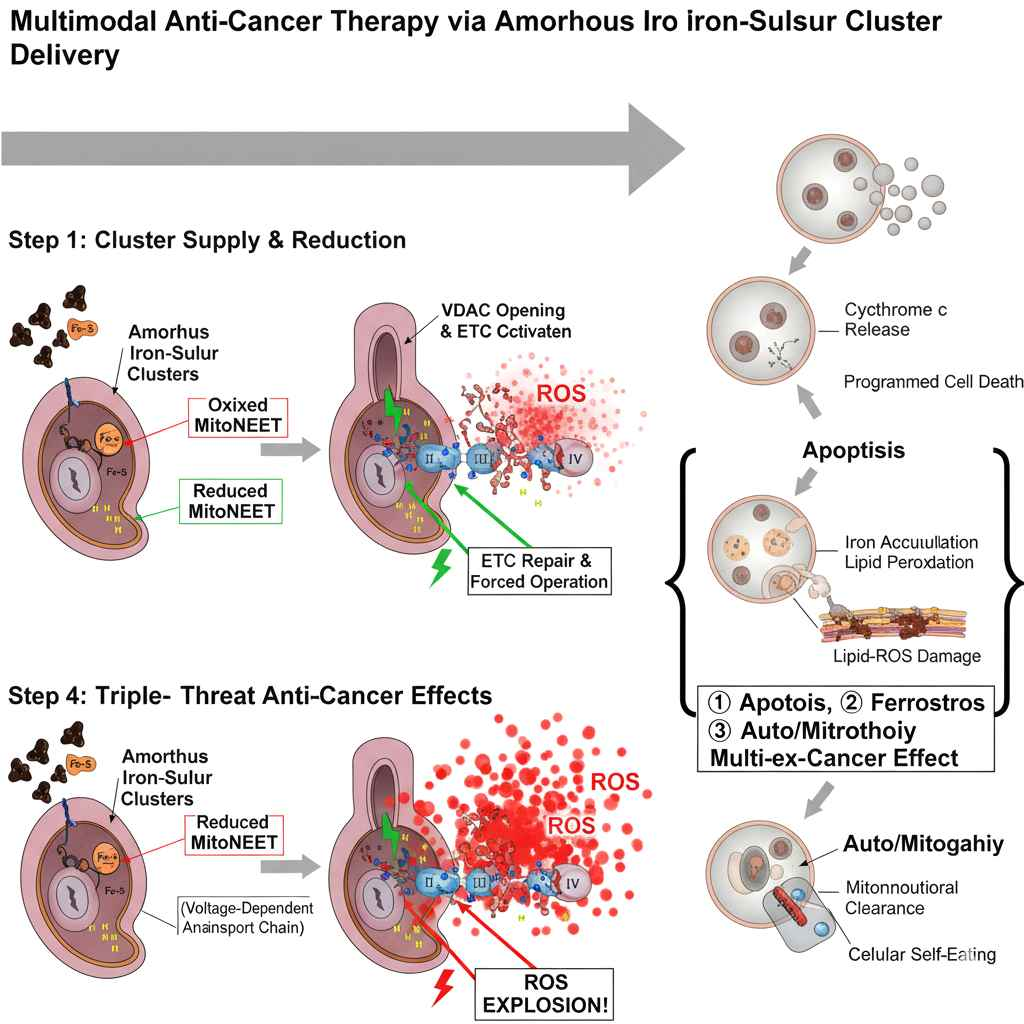
Multimodal Anti-Cancer Therapy via Amorphous Iron-Sulfur Cluster Delivery

Multimodal Therapeutic Strategy

Iron-Sulfur Cluster Delivery & ETC Reactivation Pathway

Not All Ferroptosis Is Created Equal

AlphaGen Bio has discovered a fundamentally new class of ferroptosis — one driven by metabolic reprogramming rather than chemical toxicity.

Conventional

Chemical Ferroptosis

Traditional approach using GPX4 inhibitors or System Xc- blockers.

  • Directly inhibits antioxidant defenses
  • Causes lipid peroxidation chemically
  • Non-selective toxicity to all cells
  • Significant side effects on healthy tissue
Our Approach

Metabolism-Based Ferroptosis

Novel approach using ETC reactivation via CISD3 modulation.

  • Restores suppressed mitochondrial function
  • Triggers ROS burst only in glycolytic cells
  • Metabolically conditional selectivity
  • Protects healthy OXPHOS-dependent cells

Metabolism-Based Ferroptosis Platform

A fundamentally new approach that distinguishes between healthy and pathological cells through their metabolic states — not by chemical toxicity.

Metabolic Selectivity

AG-0215 exploits the metabolic dichotomy between OXPHOS-dependent healthy neurons and glycolysis-dependent M1 microglia. This "Metabolically Conditional Selectivity" ensures only abnormal cells are eliminated.

Dual-Action Mechanism

Simultaneously protects neurons by restoring ETC function while triggering metabolic-reperfusion ferroptosis in inflammatory microglia. A true "kill and protect" strategy analogous to ischemia-reperfusion injury.

Novel Target: MINT (CISD3)

CISD3 (MiNT) is a mitochondrial iron-sulfur cluster protein governing iron homeostasis and electron transport chain function. AG-0215 supplies amorphous Fe-S clusters to reactivate suppressed CISD3.

Key Scientific Findings

Visual evidence supporting our metabolism-based ferroptosis platform and AG-0215's dual-action mechanism.

Multimodal Anti-Cancer Therapy via Amorphous Iron-Sulfur Cluster Delivery
Figure 1

Multimodal Therapeutic Strategy via Iron-Sulfur Cluster Delivery

AG-0215 delivers amorphous iron-sulfur clusters to damaged mitochondria through a carefully orchestrated 4-step process: cluster supply and reduction of MiNEET proteins, VDAC opening with ETC cofactor supply, ETC repair and forced oxidative phosphorylation, and ultimately a triple-threat anti-cancer effect.

The triple-threat effect includes: (1) Apoptosis, (2) Ferroptosis via Fenton Reaction, and (3) Auto/Mitophagy-mediated cellular clearance.

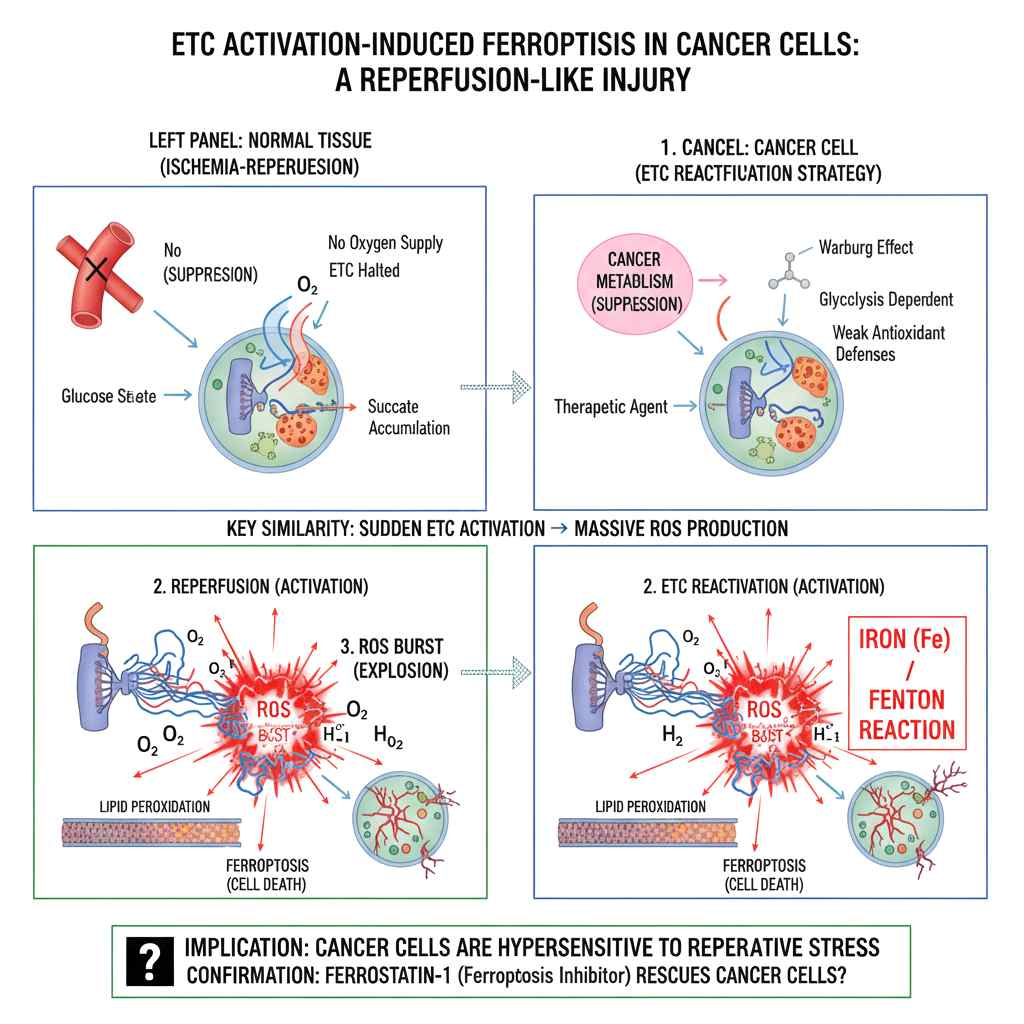
ETC Activation-Induced Ferroptosis: A Reperfusion-Like Injury
Figure 2

ETC Activation-Induced Ferroptosis: A Reperfusion-Like Injury

This key finding reveals that cancer cells and abnormal inflammatory cells exist in a state analogous to ischemia — with suppressed ETC and accumulated metabolic substrates like succinate.

When AG-0215 suddenly reactivates the electron transport chain, it creates a "metabolic reperfusion" event: a massive ROS burst, iron release via Fenton reaction, and subsequent lipid peroxidation leading to selective ferroptotic cell death.

Implication: Pathological cells are hypersensitive to reparative stress. AG-0215 exploits this vulnerability while healthy cells benefit from restored function.

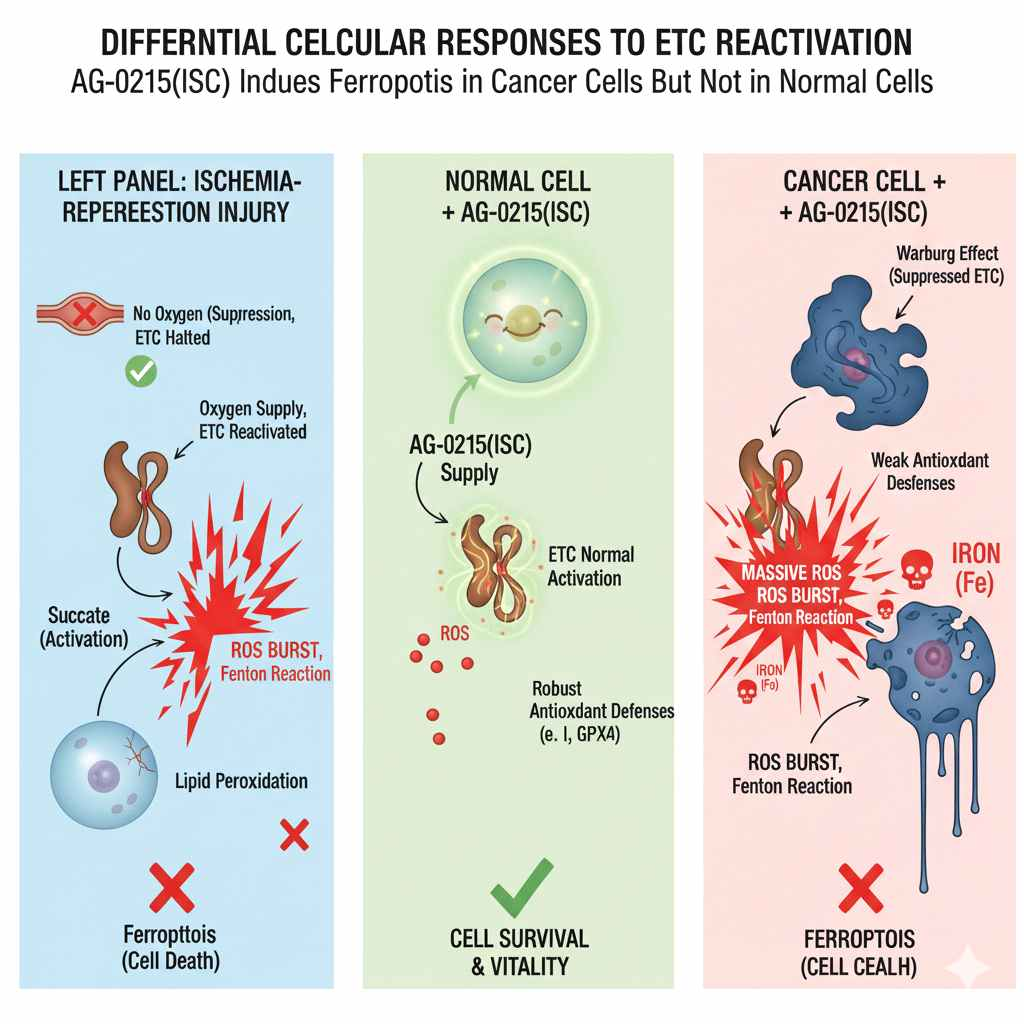
Differential Cellular Responses to ETC Reactivation
Figure 3

Differential Cellular Responses to ETC Reactivation

The definitive evidence for AG-0215's metabolically conditional selectivity. Normal cells treated with AG-0215 experience enhanced ETC function, robust antioxidant defense activation, and improved cell survival and vitality.

In contrast, cancer cells and pathological inflammatory cells undergo a catastrophic response: sudden ETC reactivation overwhelms their weakened antioxidant systems, releasing massive iron through Fenton reaction and triggering irreversible ferroptotic cell death.

Normal cells → Cell Survival & Vitality | Cancer/Pathological cells → Ferroptosis (Cell Death). Same drug, opposite outcomes based on metabolic state.

How AG-0215 Works

A step-by-step look at how AG-0215 achieves selective cell elimination through metabolic reprogramming.

1

Fe-S Cluster Supply & MiNEET Reduction

AG-0215 delivers amorphous iron-sulfur clusters and reduces oxidized MiNEET/CISD3 proteins at the mitochondrial outer membrane, restoring their function as iron-sulfur cluster transfer proteins.

2

VDAC Opening & ETC Cofactor Supply

Restored CISD3 function opens voltage-dependent anion channels (VDAC), enabling delivery of essential ETC cofactors including cytochrome c and iron-sulfur clusters to the inner mitochondrial membrane.

3

ETC Repair & Forced Oxidative Phosphorylation

With cofactors restored, the electron transport chain is repaired and forcibly reactivated. In glycolytic pathological cells, this creates "metabolic reperfusion" — sudden oxygen utilization overwhelming the cell.

4

Triple-Threat: Apoptosis + Ferroptosis + Auto/Mitophagy

The ROS burst triggers three simultaneous death pathways: cytochrome c-mediated apoptosis, iron-dependent lipid peroxidation (ferroptosis), and autophagic/mitophagic clearance of damaged organelles.

AG-0215 Dual-Action Pathway
AG-0215 → MINT (CISD3) Modulation
Fe-S Cluster Delivery
Healthy Neurons
OXPHOS-dependent
M1 Microglia / Cancer
Glycolysis-dependent
ETC Enhancement
Antioxidant ↑ | GPX4 ↑
Metabolic Reperfusion
ROS Burst | Fe²⁺ Release
Neuroprotection
Cell Survival & Vitality
Selective Cell Death
Apoptosis + Ferroptosis + Mitophagy

Development Pipeline

Our therapeutic programs target high-unmet-need diseases in neurodegeneration and oncology.

Program Target Indication Stage Progress
AG-0215 CISD3 (MINT) Alzheimer's Disease Preclinical
AG-0215 CISD3 (MINT) Parkinson's Disease Preclinical
AG-0215 CISD3 (MINT) Oncology (Solid Tumors) Discovery
AG-03xx CISD3 (MINT) ALS / Motor Neuron Disease Discovery
Next-Gen Undisclosed CNS Inflammation Discovery

Leadership

World-class scientists and industry veterans driving the next breakthrough in neuroscience therapeutics.

CEO

Chief Executive Officer

Founder & CEO

Visionary leader with 20+ years in pharmaceutical R&D and biotech entrepreneurship, driving AlphaGen Bio's mission to transform neurodegeneration therapy.

CSO

Chief Scientific Officer

Head of Research

Leading expert in mitochondrial biology and ferroptosis with extensive publication record. Architect of the metabolism-based ferroptosis platform and CISD3 targeting strategy.

CMO

Chief Medical Officer

Clinical Development

Board-certified neurologist with deep experience in CNS drug development. Previously led clinical programs at major pharma companies targeting neurodegenerative diseases.

Latest Research

Key publications and milestones from our team.

2025

Metabolism-Based Ferroptosis: A Novel Mechanism for Selective Neuroinflammatory Cell Elimination

AlphaGen Bio Research Team — Demonstrating that metabolic reperfusion-induced ferroptosis can selectively target M1 microglia while preserving healthy neurons through CISD3 modulation.

Peer Reviewed
2025

ETC Activation-Induced Ferroptosis in Cancer Cells: A Reperfusion-Like Injury Mechanism

Key discovery that pathological cells in glycolytic states are hypersensitive to metabolic reperfusion stress, providing a novel therapeutic window for selective cell elimination.

Research Article
2025

Differential Cellular Responses to AG-0215: Preclinical Validation of Metabolically Conditional Selectivity

Preclinical data confirming AG-0215 induces ferroptosis in cancer/inflammatory cells but enhances survival in normal cells — same compound, opposite metabolic outcomes.

Research Article
2024

AlphaGen Bio Secures Seed Funding to Advance AG-0215 Program

Company announces financing to support preclinical development and IND-enabling studies for its lead ferroptosis-based therapeutic candidate targeting Alzheimer's and Parkinson's diseases.

Press Release

Contact Us

Interested in partnering, investing, or learning more about our science? We'd love to hear from you.

Email

contact@alphagenbio.org

Website

www.alphagenbio.org

Location

Seoul, South Korea

LinkedIn

AlphaGen Bio